
Ponds and creeks are usually the best part of a property, and usually the most overgrown. Here's how to open them back up without causing problems at the water's edge.
- Open up access and views, but leave some vegetation right at the bank.
- Pond dams: woody brush and saplings on an earthen dam are worth getting off.
- Stay out of the water. Work in the stream itself can need permits.
- Work dry. Bottoms near water get soft. Timing matters.
Around ponds
Most pond owners want two things: to see the water and to get to it. That usually means opening up the brush between the house or yard and the pond, cutting a path down to the bank or dock, and clearing a spot to sit or fish.
Leave a strip at the edge. A band of grass and low plants right at the waterline helps hold the bank and filters runoff before it hits the pond. It's also where a lot of wildlife lives.
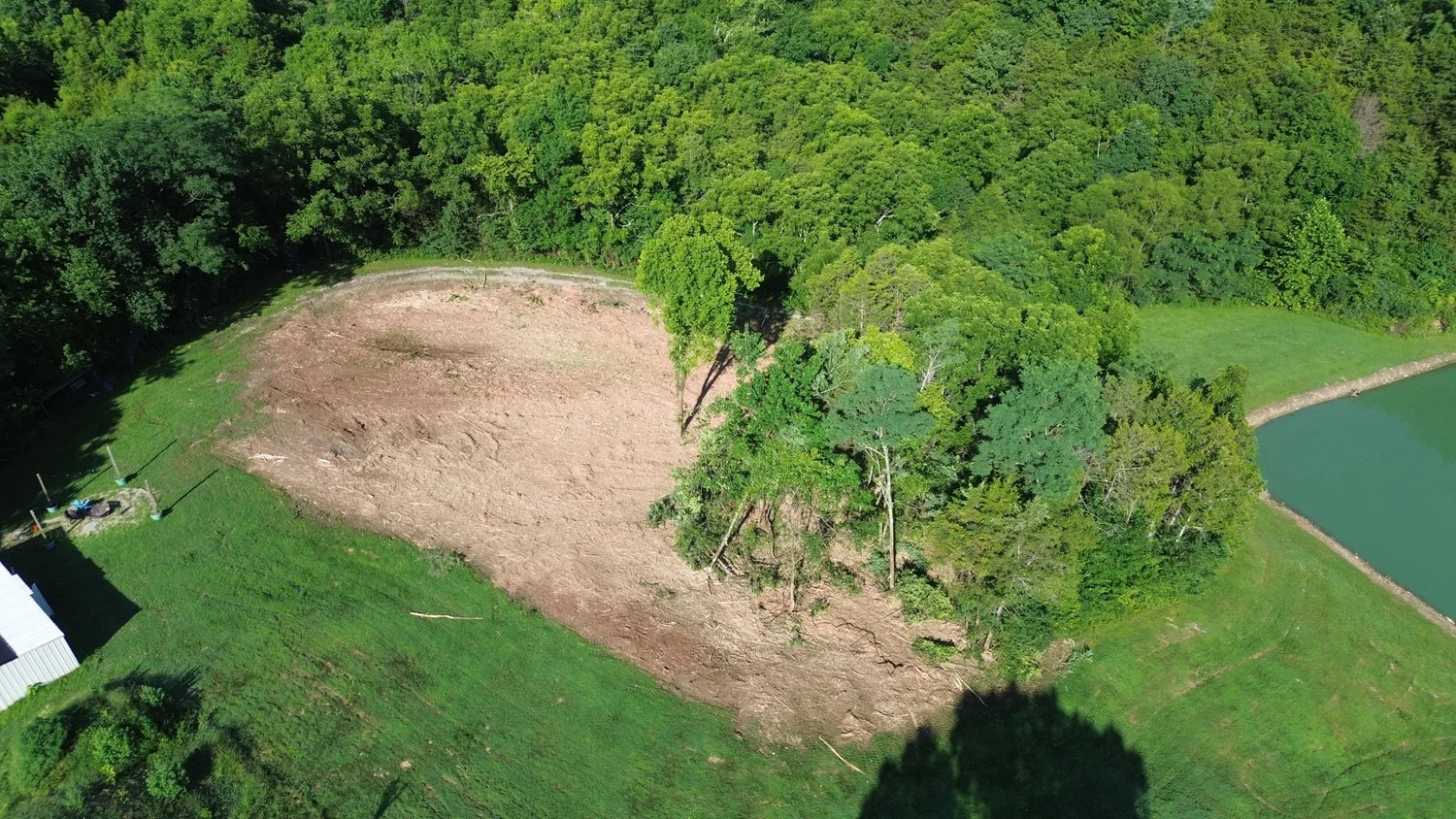
Pond dams
If your pond has an earthen dam, woody growth on it is a common problem. Tree and shrub roots on a dam can create paths for water to seep through as they grow and die, and thick brush hides problems like burrows and wet spots. Keeping a dam mowed in grass is the usual recommendation. Clearing brush and saplings off it is a good place to start. For big trees on a dam or any signs of leaking, talk to an engineer or your county soil and water conservation district before removing them.
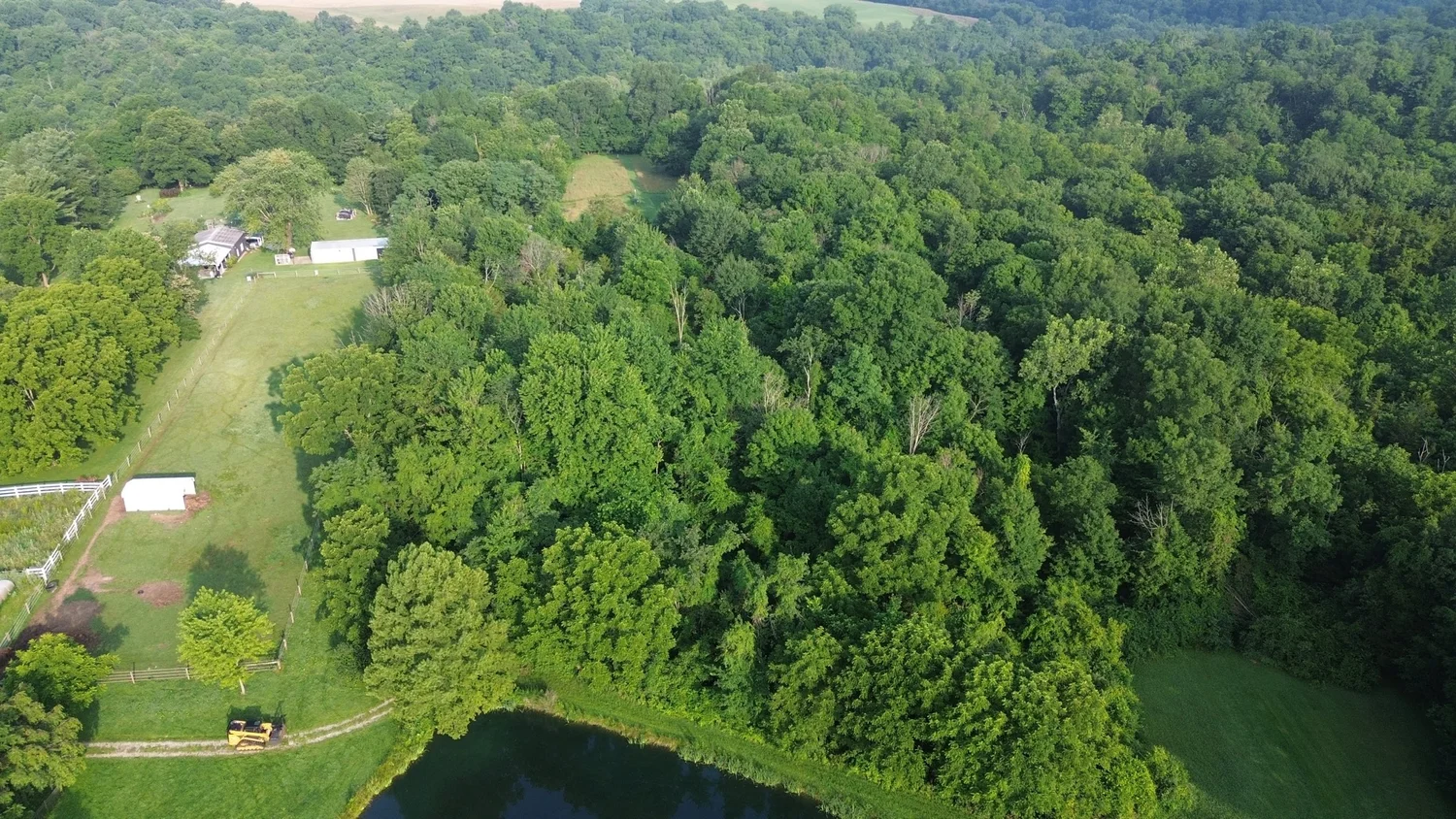
Along creeks
Creek banks are where you want to be most careful:
- Keep a buffer. Trees and roots along the bank hold it together. Clear the honeysuckle under them, not the bank itself.
- Stay out of the channel. We work from the bank, not in the water. Work in a stream or its channel can need permits, so check before planning anything like that.
- Get access in the right spot. A path down to a gravel bar or flat spot beats cutting down a steep bank.
Timing and ground conditions
Low ground near water is often soft. We schedule around wet weather and work the drier areas first. Late summer, fall and frozen winter ground are usually best. See the best time of year for mulching.
Why mulching works well near water
Forestry mulching grinds brush in place and leaves the ground covered. There are no burn piles, no bare dirt to wash into the water and no heavy hauling across soft ground. It's a good fit for sensitive areas.
Want your pond or creek back? See our Southeast Indiana or forestry mulching pages, or give us a call.
Common questions
Can you clear brush around my pond?
Yes. We open up views and access and usually leave a strip of grass and low plants right at the waterline to protect the bank.
Should trees be removed from a pond dam?
Woody growth on an earthen dam is generally discouraged. Clearing brush and saplings is a good start. For big trees or any signs of leaking, talk to an engineer or your soil and water district first.
Do I need a permit to clear along a creek?
Clearing brush from the bank usually doesn't, but work in the stream or channel itself can. Check with your county or the state before planning in-stream work.
Will clearing near water cause erosion?
Forestry mulching leaves the ground covered and the roots in place. Keeping a vegetated buffer at the edge helps even more.
Get a free quote
Bulk Co is a forestry mulching and land clearing contractor based in Harrison, Ohio, serving properties within 50 miles of Greater Cincinnati. Tell us what you've got and we'll come walk it.