
Short answer: we mulch all year. But if you've got a choice, late fall through winter is hard to beat around Cincinnati. Here's why, and what each season actually looks like on a job.
- Late fall (Oct–Nov): the best time to find honeysuckle. It's still green after everything else drops its leaves.
- Winter: leaves are off so you can see the land, frozen ground holds up machines better, and there's no poison ivy or ticks to deal with.
- Spring and summer: totally doable, just thicker foliage and softer ground after rain.
- Book ahead: lots of people want it cleared before spring, so winter spots fill up.
Late fall: honeysuckle shows itself
Bush honeysuckle leafs out earlier in spring and holds its leaves later in fall than almost anything native. Ohio State Extension and the University of Dayton both point out that late October into November is when it stands out the most. The oaks and maples are bare and the honeysuckle is still green.
That makes fall a great time for a walkthrough. You can see how much is actually there, where it's thickest, and which trees are worth keeping. It's a lot easier to plan a job when the problem is that obvious.
Winter: the easiest time to clear
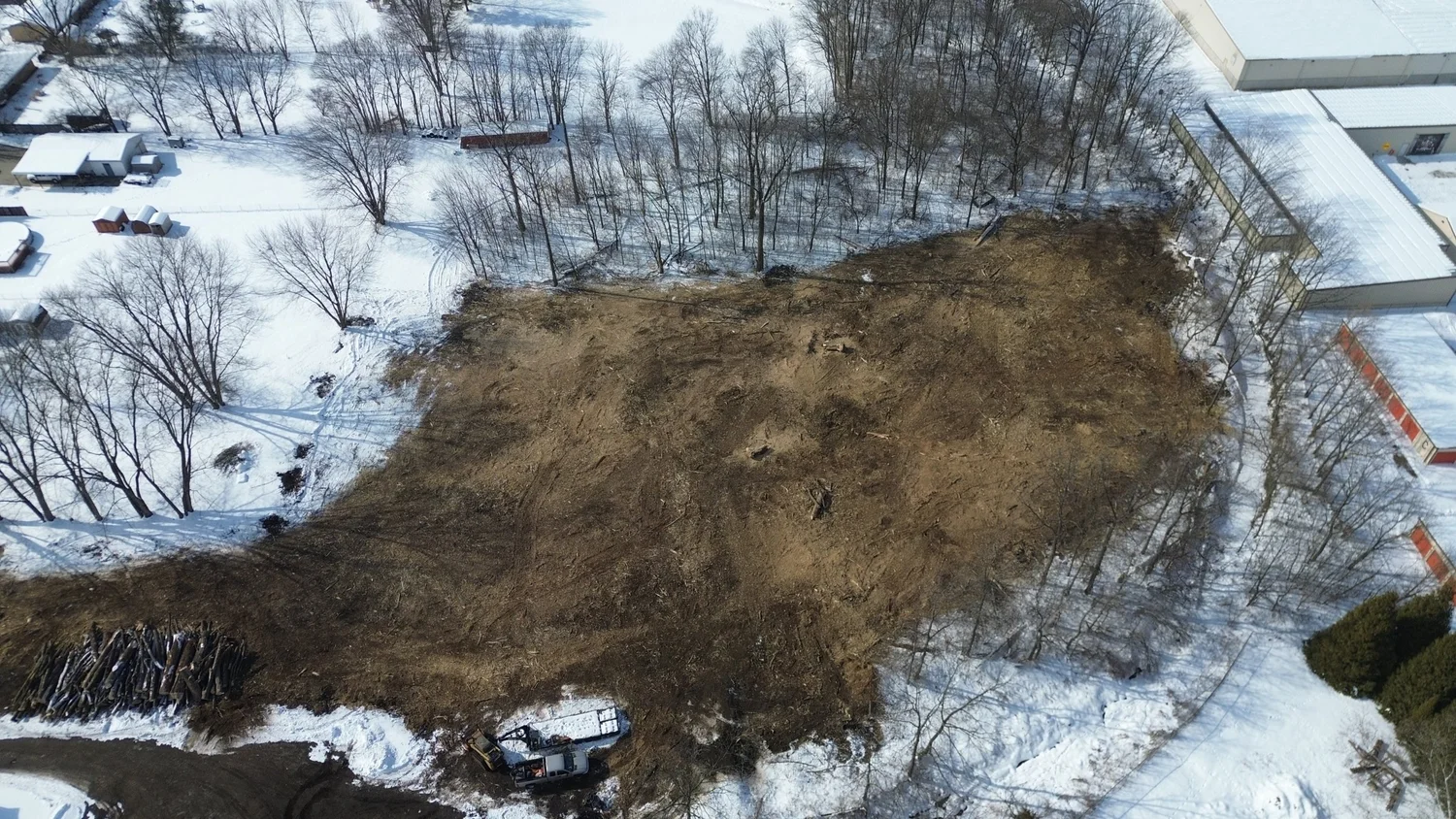
Winter is our favorite time to work in the woods, for a few reasons:
- You can see everything. With the leaves down, it's easy to spot property lines, fences, drainage, old junk piles and the trees you want to save.
- Ground conditions. When the ground is frozen it holds up our tracked machines better and they leave less of a mark. Our mulchers are on rubber tracks that spread the weight out, but firmer ground always helps.
- Nicer conditions in the brush. No poison ivy in full leaf, no ticks, no mosquitoes. That's good for the crew and for you when you go walk it afterward.
- Ready by spring. Clear it over the winter and you're ready for spring projects: a fence, a building pad, a food plot, seeding, or just having your yard back.
Spring and summer: still a good time
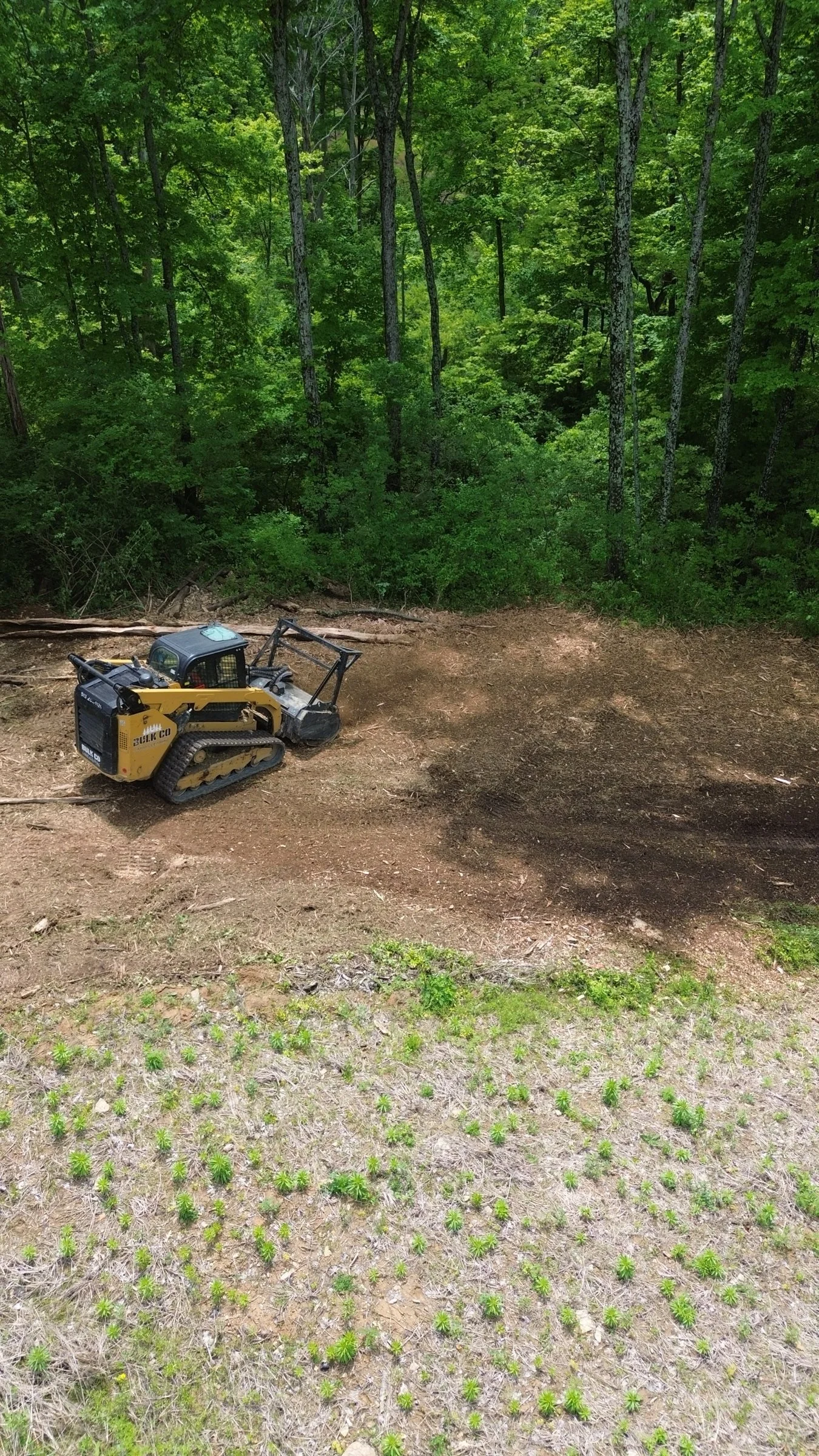
We run mulchers all spring and summer too. Things just look a little different:
- Full foliage makes brush look denser and hides what's in it. We'll still walk it with you and flag the keepers.
- After a lot of rain, low and wet spots can get soft. We'll work the dry areas first, or come back when it dries out, instead of rutting up your property.
- Summer is when regrowth recuts happen. If we cleared it last winter, the sprouts coming up now are what you want to knock down while they're still soft.
What about wet weather?
Rain doesn't cancel mulching, but it does change the plan. The mulch layer we leave behind protects the soil and helps keep it from washing. Saturated clay and steep, wet hillsides are where we slow down. If conditions are going to do more damage than good, we'll tell you and reschedule instead of tearing up the ground.
So when should you call?
Whenever it's on your mind. We'll come walk it, tell you honestly what time of year makes sense for your property, and get you on the schedule. If you want it done over the winter, call in the fall. Those dates go first.
Common questions
Can you do forestry mulching in the winter?
Yes. Winter is one of the best times. The leaves are down so you can see the land, frozen ground holds the machines better, and you're ready for spring projects.
When is the best time to remove honeysuckle in Ohio?
Late fall is the easiest time to find it, because bush honeysuckle stays green after most native plants drop their leaves. We mulch it year-round, and follow-up recuts happen in the growing season.
Does rain stop forestry mulching?
Not usually. We work around wet spots and slow down on saturated ground. If it would rut up the property, we reschedule.
How far ahead should I book?
A few weeks is typical. Winter dates fill up because a lot of people want their land cleared before spring, so call in the fall if you want winter work.
Get a free quote
Bulk Co is a forestry mulching and land clearing contractor based in Harrison, Ohio, serving properties within 50 miles of Greater Cincinnati. Tell us what you've got and we'll come walk it.