
Half the properties around Cincinnati have a hillside that's been taken over by honeysuckle. People want it cleared, but they're worried about the hill washing out into the yard. That's a fair worry, and it's why how you clear a hill matters more than whether you clear it.
- Don't strip it. Leave the roots in the ground and cover the soil.
- Forestry mulching leaves a mulch layer that protects the slope.
- Use the right machine. Steep ground gets a Ventrac, not a mulcher that shouldn't be on it.
- Get cover growing before the brush comes back.
Why stripping a hillside is a bad idea
When a dozer pulls brush out roots and all, it leaves bare, loosened soil on a slope. The first heavy rain carries it downhill. You end up with gullies on the hill and mud at the bottom.
Why mulching works better on slopes
- Roots stay put. The mulcher grinds the brush at ground level. The root systems stay in the soil and keep holding it while new cover comes in.
- The soil stays covered. The mulch layer acts like a blanket. It slows down rain hitting the ground and water running down the slope.
- Light on the ground. Our machines run on rubber tracks, not steel, and we keep the disturbance down.
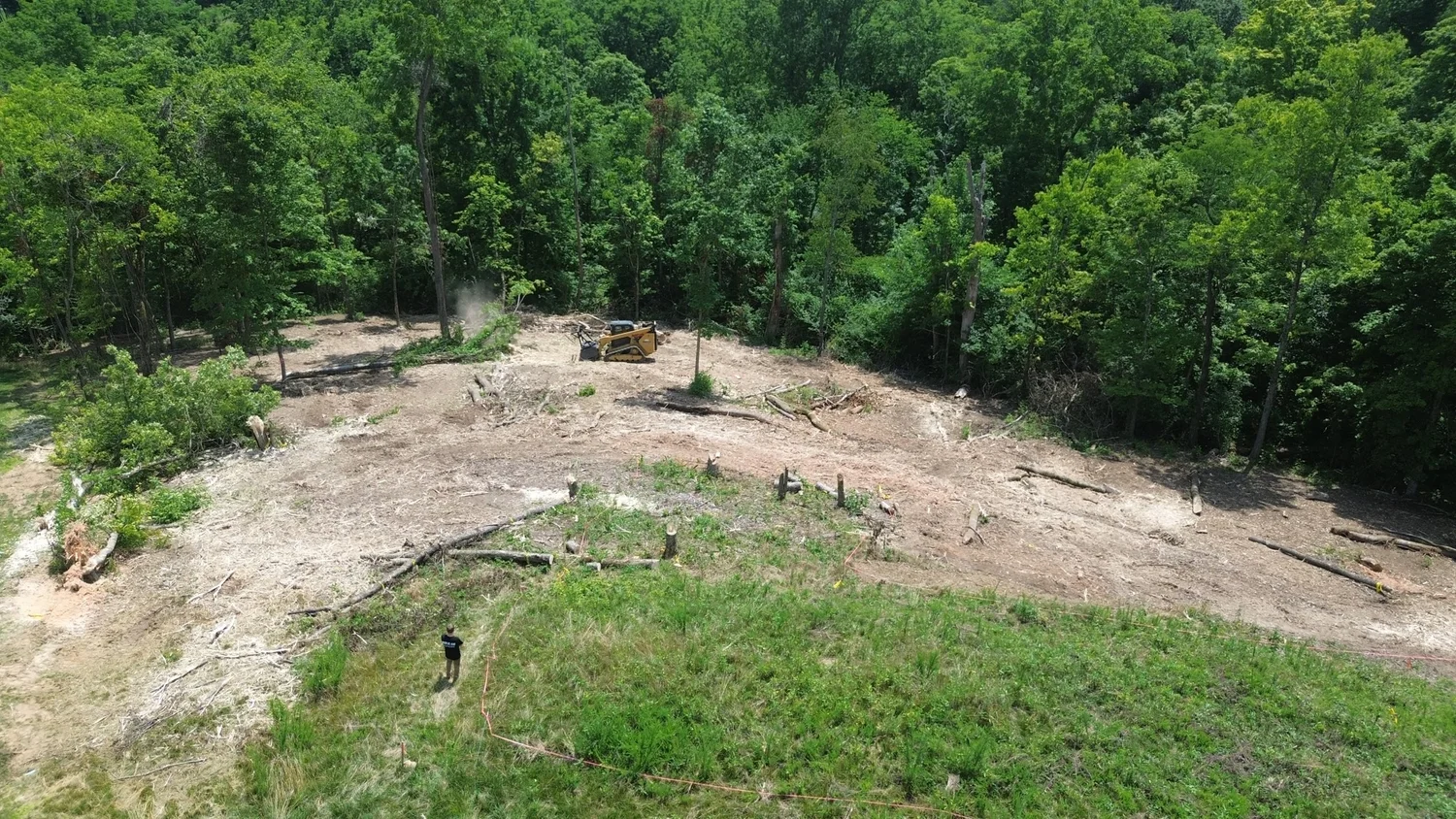
The right machine for the slope
Some slopes are fine for a tracked mulcher. Some aren't. For the steep stuff, we bring our Ventrac, a compact, low, all-wheel-drive tractor built for hillsides. We look at every slope on the walkthrough. If something isn't safe to put a machine on, we'll tell you.
After the brush is gone
- Get cover established. Grass or native plants are what hold a hill long term. See land restoration and seeding.
- Recut regrowth. Honeysuckle will try to come back. Keep it knocked down while the grass takes hold.
- Watch the bottom. If there's a spot where water already runs, keep an eye on it after the first few big rains.
When to be extra careful
Very steep slopes, hills right above a house, creek banks and ground that's already slipping deserve extra thought. Sometimes the right answer is to clear only part of the hill, leave a buffer at the bottom, or keep some brush in place. If there's an existing slip or drainage problem, that may need an engineer, not just a mulcher. We'll be straight with you about it.
Want your hillside back? Call us or check out Northern Kentucky and Hamilton County forestry mulching.
Common questions
Will clearing my hillside cause erosion?
Stripping it can. Forestry mulching leaves the roots in the ground and a mulch layer on top, which helps protect the slope while new cover grows in.
Can you clear a really steep hill?
Often, yes. Our Ventrac is built for steep slopes. We check every slope on the walkthrough, and if something isn't safe, we'll say so.
Should I plant grass after clearing a hillside?
It's a good idea. Grass or native cover is what holds a hill long term and keeps honeysuckle from taking it back.
My hillside is already slipping. Can you fix it?
Clearing brush won't fix a slip. If ground is actively moving or there's a drainage problem, get an engineer to look at it first.
Get a free quote
Bulk Co is a forestry mulching and land clearing contractor based in Harrison, Ohio, serving properties within 50 miles of Greater Cincinnati. Tell us what you've got and we'll come walk it.