
The number one question after a forestry mulching job: "What about all these chips?" The short answer is that they're doing a job, and they go away on their own. Here's what to expect.
- The mulch protects the soil and holds moisture.
- It breaks down over time. Thin layers go faster than thick ones.
- Grass can grow through thin layers. For lawn, work the ground before seeding.
- Keep it away from your foundation, like any mulch.
Why it's left there
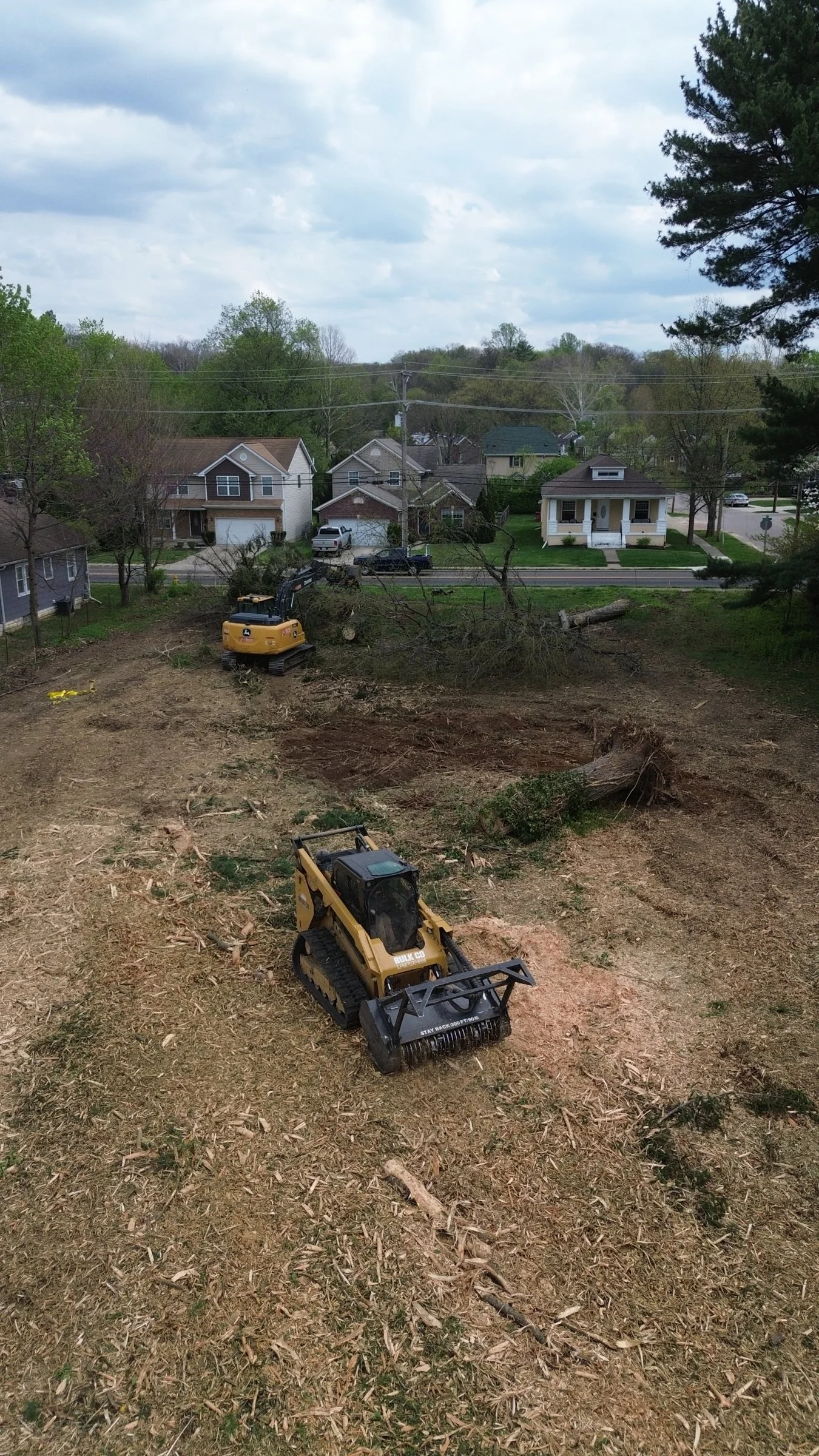
Forestry mulching grinds brush and small trees into chips right where they stood. Leaving it is the point. There's no burning, no hauling, and the ground stays covered so it doesn't wash. It also holds moisture and slowly feeds organic matter back into the soil.
How long does it last?
It depends mostly on how thick it is. Light brush leaves a thin layer that breaks down fairly quickly. Thick honeysuckle and saplings leave a heavier layer that takes longer. Shade, moisture and the type of wood matter too. You'll see it settle and darken within the first season, and it keeps breaking down from there.
Will grass grow through it?
- Thin layer: grass and native plants come up through it on their own.
- Thick layer: it slows things down. Wood chips sitting on the surface also tie up some nitrogen while they break down, which can make new grass look a little hungry.
- If you want lawn: work the ground and mix in or thin the mulch before seeding so the seed gets into soil. We can get the ground ready. See land restoration and seeding.
Around your trees
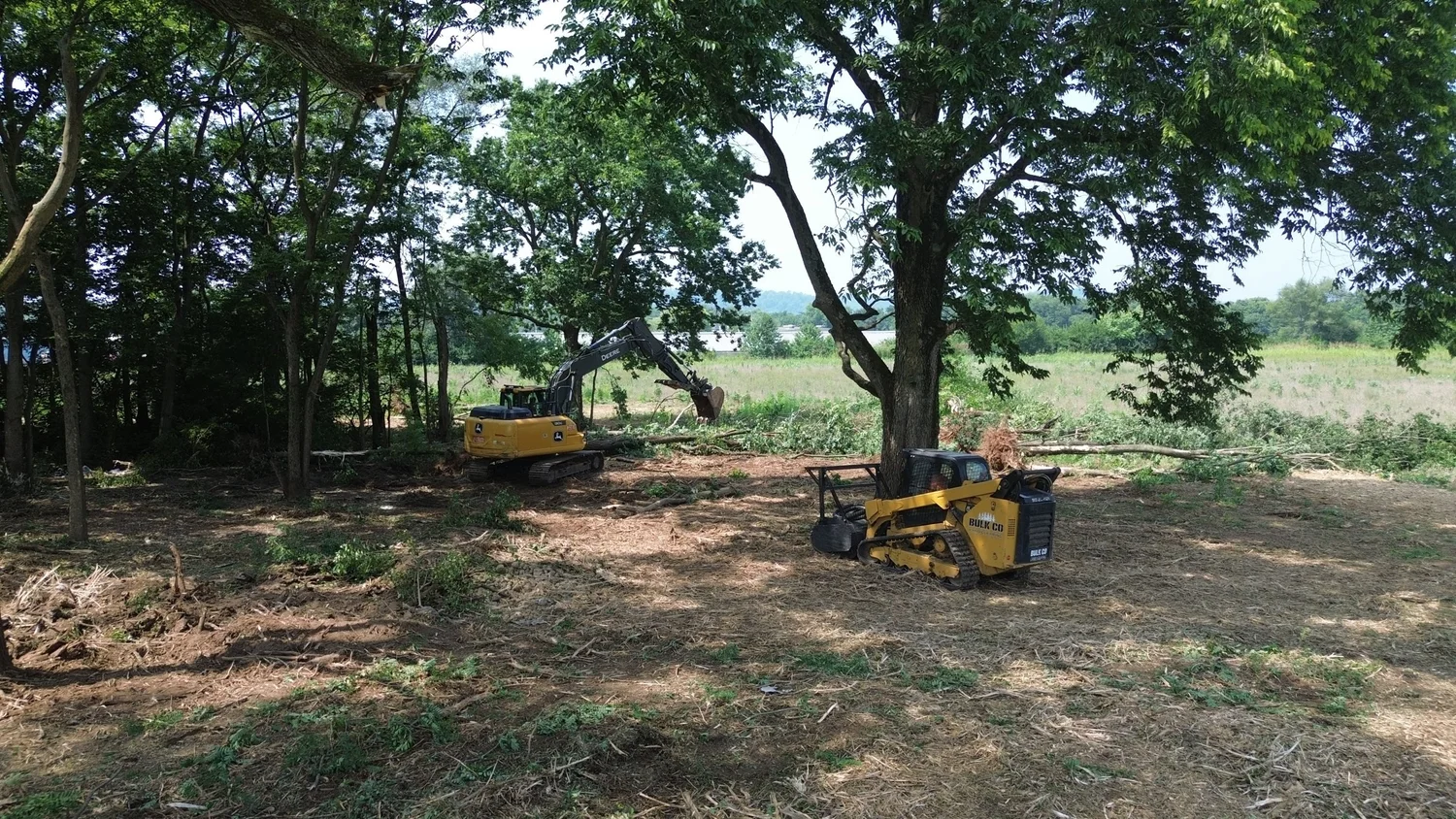
Keep mulch from piling up against the trunks of trees you're keeping. Mulch heaped against bark holds moisture right on the trunk. We pay attention to that on the job, and if you've got trees you're especially careful about, tell us at the walkthrough.
Near the house
Like any mulch, it's best kept back from your foundation and siding so you're not holding moisture against the house. If we're clearing close to a building, we keep that in mind.
Can you haul it away?
It can be moved, but for most jobs it's not worth paying for. The mulch protects the ground and breaks down on its own. If there's a specific spot where you need it gone, like a future garden or a building pad, tell us and we'll plan for it.
More on what the day looks like in what to expect on mulching day, or see forestry mulching.
Common questions
How long does forestry mulch take to break down?
It depends mostly on how thick the layer is, plus shade and moisture. Thin layers break down fairly quickly and thick ones take longer. You'll see it settle in the first season.
Will grass grow through forestry mulch?
Through a thin layer, yes. For a thick layer, or if you want lawn, the ground should be worked before seeding so seed gets into soil.
Do I need to remove the mulch after forestry mulching?
Usually not. It protects the soil and breaks down on its own. If a specific spot needs to be clear, we can plan for that.
Is forestry mulch bad for my trees?
Not if it's kept off the trunks. We avoid piling mulch against trees you're keeping.
Get a free quote
Bulk Co is a forestry mulching and land clearing contractor based in Harrison, Ohio, serving properties within 50 miles of Greater Cincinnati. Tell us what you've got and we'll come walk it.