
The first question everybody asks is "what's it going to cost?" So here are real numbers, based on the jobs we've actually done around Cincinnati, Northern Kentucky and Southeast Indiana. After that, we'll walk through what moves the price up or down.
- Most residential forestry mulching jobs start around $2,100 and land between $2,100 and $3,500.
- A full day with one machine typically runs $2,300 to $2,500.
- Per acre: light brush runs roughly $2,000 to $2,500. Typical honeysuckle runs $3,500 to $4,500. Heavy, steep or tree-heavy ground costs more.
- Harder single jobs (steep slopes, dead trees, ponds, multiple machines) usually run $3,300 to $4,500.
- Big farm and commercial jobs that take several days run into five figures.
These are ranges from real jobs, not a quote. Every property is different, and we give you a firm price after a walkthrough. Here's what moves the number.
What drives the price
1. How thick it is
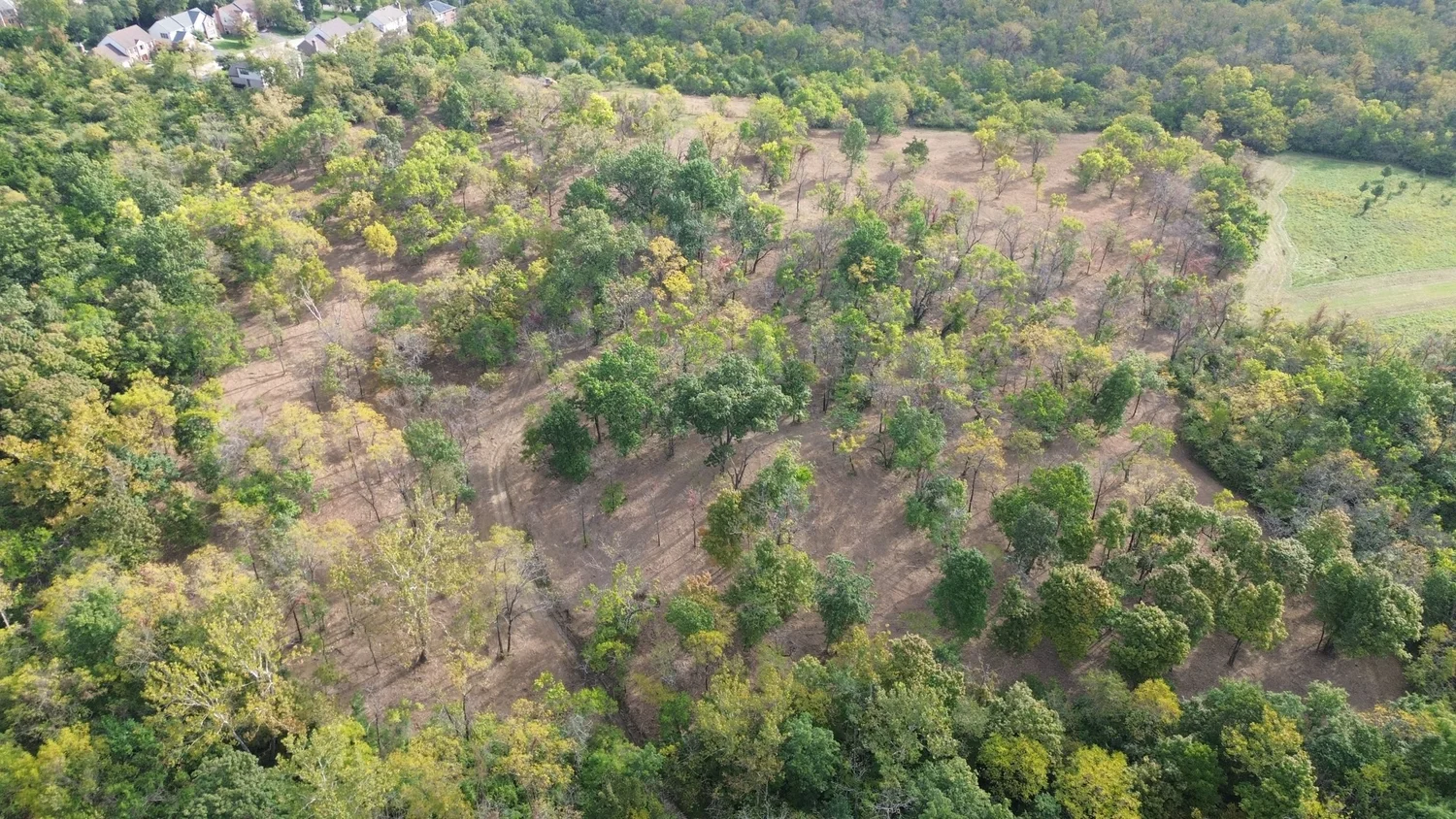
This is the biggest one. A mulcher eats light brush fast. A solid wall of mature honeysuckle, saplings and small trees takes a lot longer per acre. Tree size matters too. Brush and small trees go quickly, bigger trees take longer, and the really big ones are usually worth keeping anyway.
2. How much ground
More acreage means more machine time, but bigger jobs usually come in cheaper per acre. Hauling equipment out and setting up costs the same whether we're there for two hours or two weeks.
3. Terrain and access
- Hills: steep ground is slower and sometimes needs a different machine. We run a Ventrac on slopes the mulchers shouldn't be on.
- Wet ground: we work around soft spots or wait for them to dry instead of rutting up your property.
- Getting in: narrow gates, tight driveways and no place to park a trailer all add time.
- Hidden stuff: old fence wire, junk piles and metal in the brush slow things down and wear out teeth.
4. The method
Forestry mulching grinds brush and small trees in place. No burn piles, no hauling and no dump fees, which is why it's usually the most cost-effective way to clear brush and small trees. Bulldozer clearing pushes everything out roots and all, then the debris has to go somewhere. You need that under a foundation, but you don't need it across the whole property. More in mulching vs. bulldozer clearing.
5. Stumps
- Leave them low. The mulcher grinds stumps down close to the ground. That's the cheapest option and fine for woods, trails and yards you're reclaiming.
- Grind them below grade. Use a stump grinder where you'll mow or plant.
- Full removal, roots and all. Needed where you're building or putting down gravel.
6. What happens after
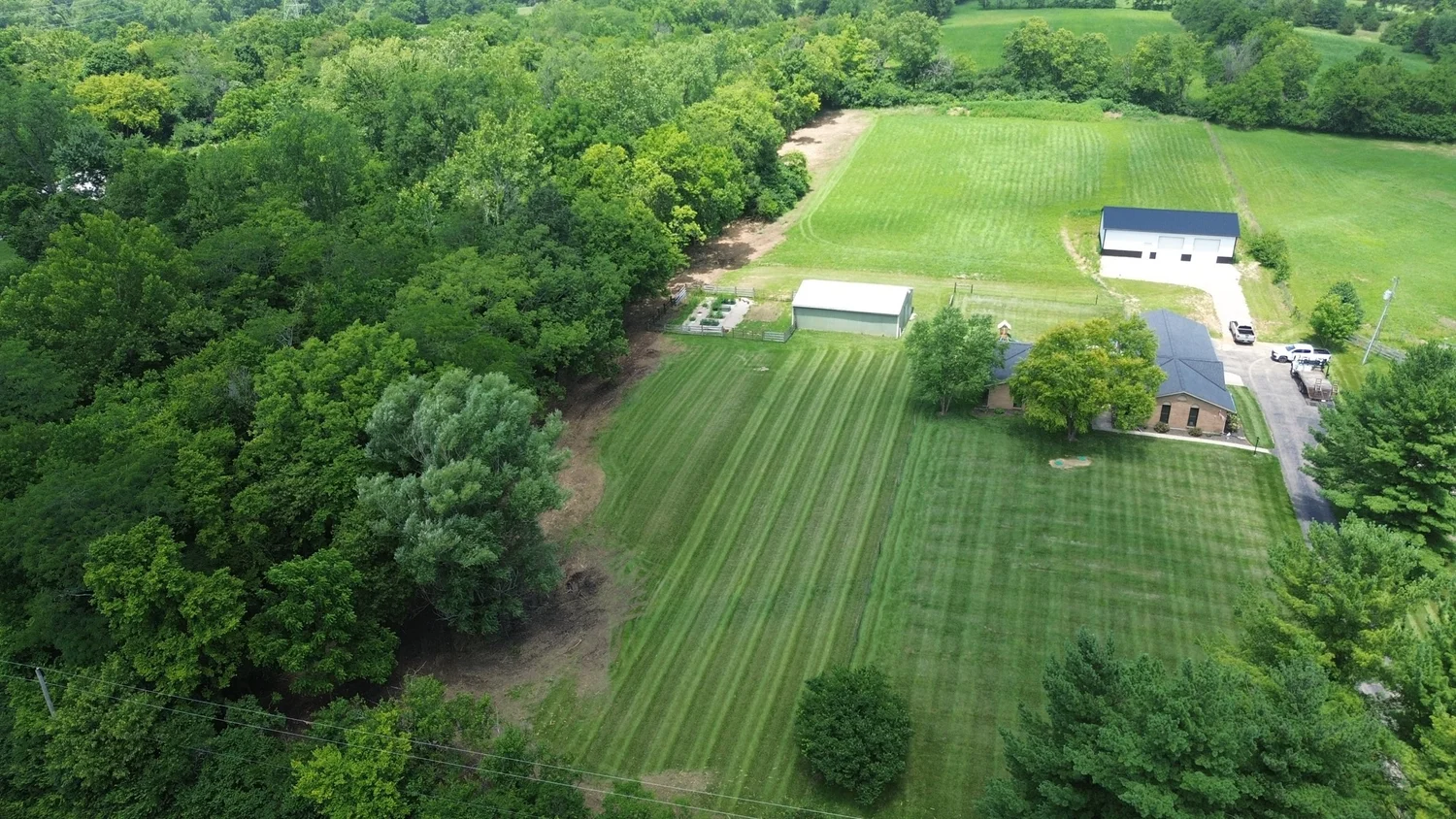
If you want grass where the brush was, plan on getting the ground ready for seeding. If it was honeysuckle, plan on a recut the next season. Neither is required, but both are part of the real cost of keeping it cleared.
Other costs to know about
- Permits: most residential brush clearing doesn't need one, but some building projects, waterway work and commercial sites do. Check with your township or county.
- Erosion control: big disturbed areas on slopes or near creeks can need silt fence or seeding.
- Hauling: with traditional clearing, getting debris off site can be a real line item. Mulching avoids it.
How to keep the cost down
- Be clear about what you actually need cleared. Don't pay to strip ground you'll leave wooded.
- Flag the trees you want saved and pull junk out of the brush ahead of time.
- Bundle it. Clearing, a trail and a recut plan in one trip beats three trips.
- Do it before it gets worse. Honeysuckle only gets thicker every year.
How we price
We walk the property, talk through what you want, and give you either a hard price for the job or a day rate, whichever makes more sense for the work. No surprises. Call us or request a quote and we'll come take a look.
Common questions
How much does forestry mulching cost per acre?
On our jobs, light brush runs roughly $2,000 to $2,500 an acre and typical honeysuckle runs $3,500 to $4,500 an acre. Heavy, steep or tree-heavy ground costs more. We give a firm price after a walkthrough.
What's the minimum for a forestry mulching job?
Most of our residential jobs start around $2,100. Small backyard jobs usually land between $2,100 and $3,500.
What is your day rate for forestry mulching?
A full day with one machine typically runs $2,300 to $2,500.
Is forestry mulching cheaper than traditional land clearing?
Usually, for brush and small trees, because there's no burning, hauling or dump fees. Ground you're building on still needs stumps and roots removed.
Do you charge to come look at my property?
No. We walk it with you and give you a price.
Does it cost more to keep stumps out?
Yes. Leaving stumps ground low is cheapest. Grinding below grade or full removal adds cost, so we only do it where you need it.
Get a free quote
Bulk Co is a forestry mulching and land clearing contractor based in Harrison, Ohio, serving properties within 50 miles of Greater Cincinnati. Tell us what you've got and we'll come walk it.