
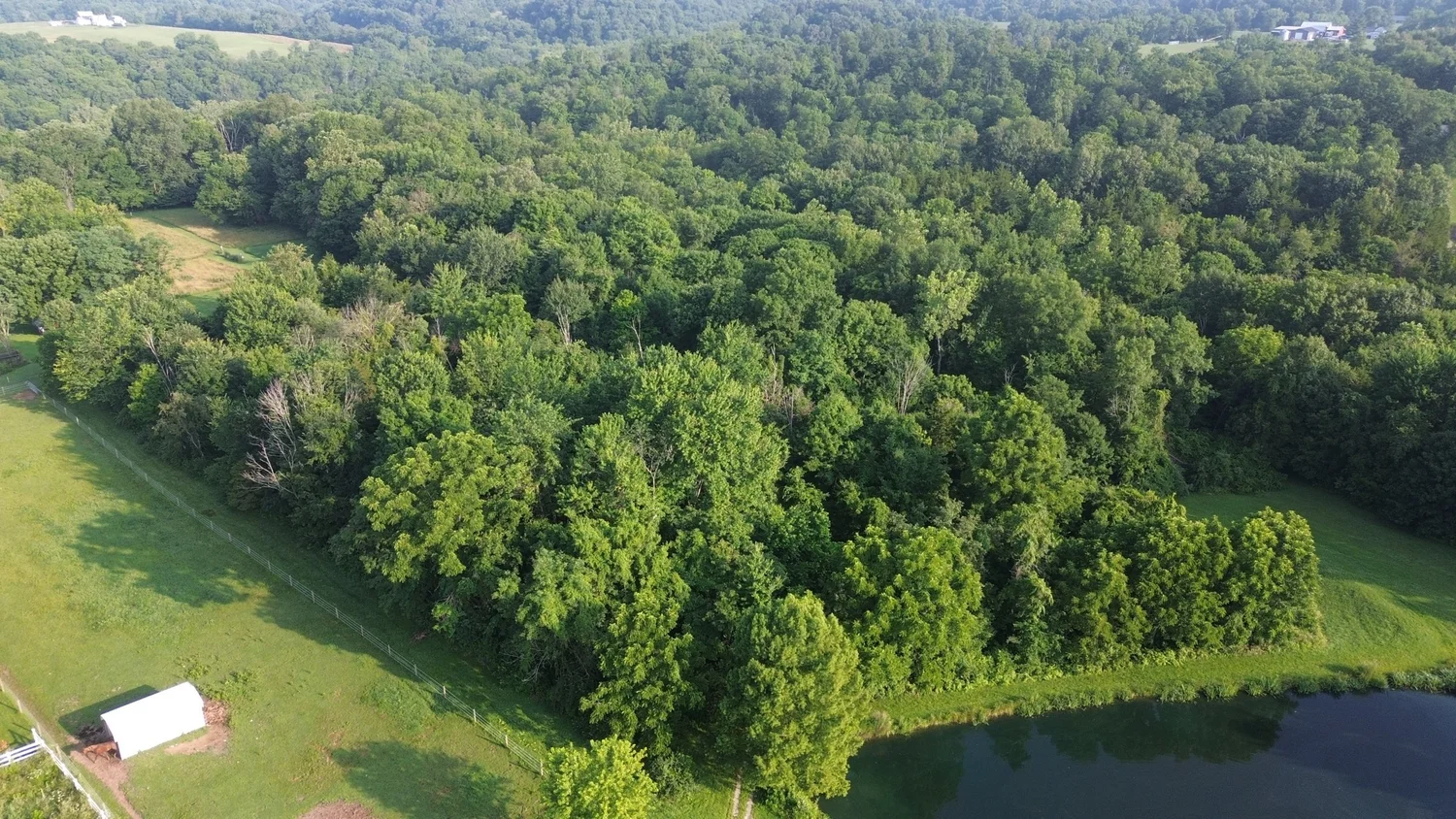
A lot of hunting ground around here is choked with honeysuckle. It's great cover for deer and bad for you when you're trying to see, shoot or get to your stand quietly. Forestry mulching lets you open up exactly what you need and leave the rest.
- Do the work well before season so deer have time to settle into the new layout.
- Access trails let you get to stands quietly, without walking through bedding areas.
- Shooting lanes should be narrow and planned from the stand, not from the ground.
- Food plot openings need the ground worked after mulching before you plant.
Timing: get in and get out early
The biggest mistake is clearing right before season. Machine noise and a changed landscape will push deer around for a while. Do the work in late winter or spring after the season ends, or in summer, so things are settled by fall. That also gives you time to plant plots and let regrowth come in where you want cover.
Access trails
Getting to your stand without being seen, heard or smelled is half the battle. A mulched access trail gives you a quiet, clear path in and out:
- Route it along edges and downwind of where deer bed, not through the middle.
- Use terrain like ditches, ridgelines and creek banks to stay hidden on the way in.
- A mulched trail is quiet underfoot, with no sticks to snap.
- Make it wide enough for a UTV if you'll be hauling stands, feeders or a deer out.
More on routing in our post on planning a trail through your woods.
Shooting lanes
Plan shooting lanes from the stand. Sit up there with some flagging tape and figure out where you actually want to see. Lanes should be narrow, just wide enough for a clear shot, so deer still feel covered. A few well-placed lanes beat one big opening. Mulching takes out the honeysuckle and saplings and keeps the trees you want for cover and mast.
Food plot openings
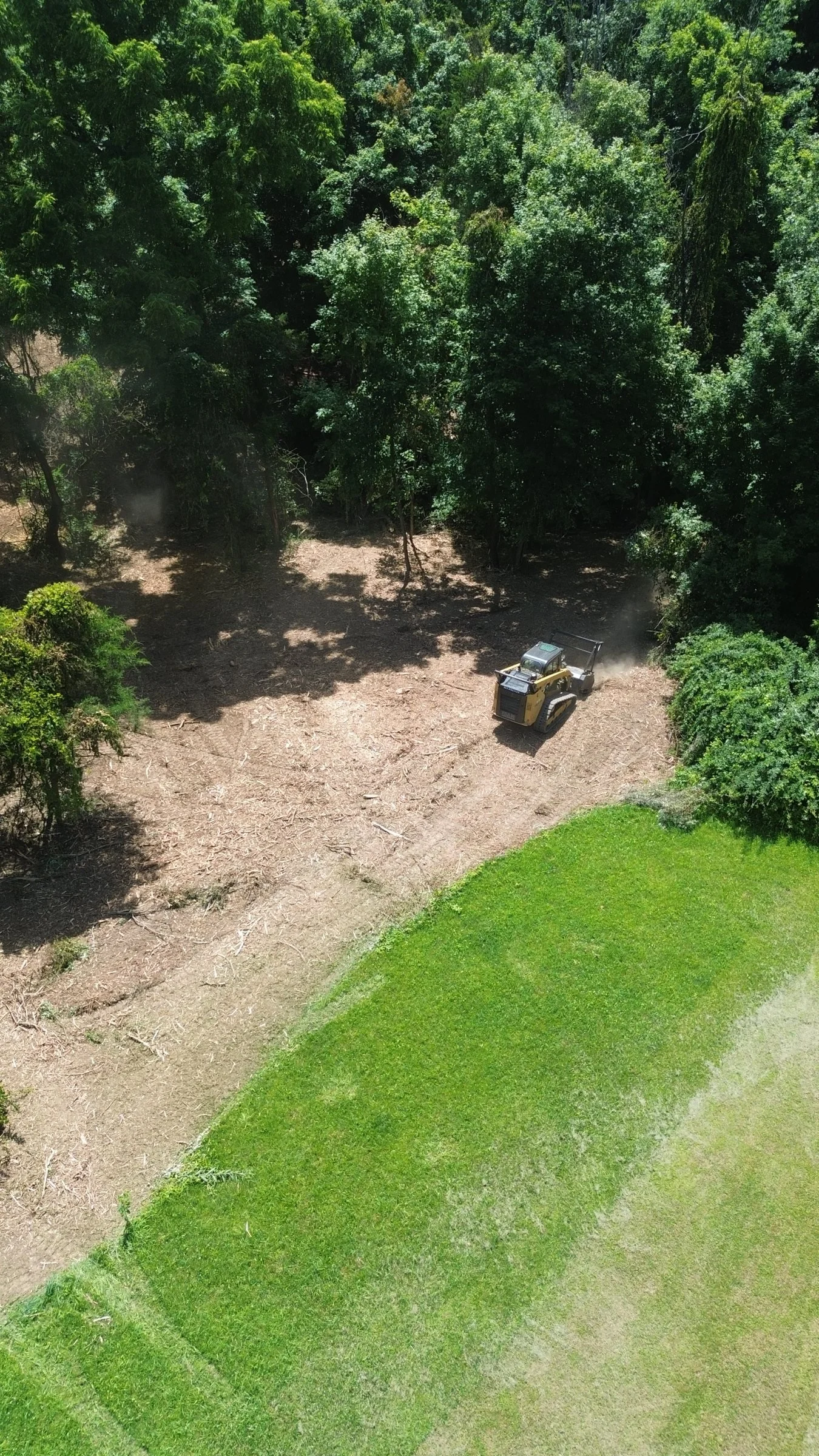
A mulcher can open up a plot in the woods or reclaim an overgrown field edge fast. Keep in mind that a fresh mulch layer isn't a seedbed. Before you plant, you'll want to work the ground so seed gets into soil, not wood chips. We can break up the ground after mulching. See our land restoration page.
Shape matters too. Long, irregular plots with cover close to the edge get more daytime use than a perfect square in the open.
Leave some cover
Don't clear everything. Deer need bedding cover and thick stuff to feel safe. The point of mulching is to be selective: open up lanes, trails and plots, and leave the thick cover where it does you some good.
We do this all over the tristate
We cut hunting trails and openings across Southwest Ohio, Northern Kentucky and Southeast Indiana, including Dearborn, Franklin and Ripley counties. Check out our trail cutting page or call us to walk your ground.
Common questions
When should I clear hunting land?
Well before season, in late winter or spring after the season closes, or in summer. That gives deer time to settle in and gives you time to plant plots.
Can you plant a food plot right on top of mulch?
Not well. Seed needs soil contact. After mulching, the ground should be worked before planting. We can break up the ground for you.
How wide should shooting lanes be?
Just wide enough for a clear shot. Narrow lanes keep deer feeling covered. Plan them from the stand.
Do you work on hunting land in Indiana and Kentucky?
Yes. We work across Southwest Ohio, Northern Kentucky and Southeast Indiana.
Get a free quote
Bulk Co is a forestry mulching and land clearing contractor based in Harrison, Ohio, serving properties within 50 miles of Greater Cincinnati. Tell us what you've got and we'll come walk it.