
A good trail makes a wooded property actually usable. You can walk it, ride it, get to the back corner, check fence and get to your stand. Here's how we plan trails with landowners around Cincinnati, Northern Kentucky and Southeast Indiana.
- Decide what's using it first: feet, ATVs, a UTV or a truck. That sets the width and overhead clearance.
- Follow the land. Run across slopes instead of straight up them, and stay out of wet bottoms.
- Route around the good trees. Mulching lets us leave the oaks and take the brush.
- Plan for upkeep. A recut each season or two keeps it open.
1. Start with what's going to use it
A walking path through the woods can be pretty narrow and still feel open. An ATV or side-by-side trail needs more width, more overhead clearance and gentler turns. If you want to get a truck or a tractor back there, plan for that from the start. Widening later is doable, but it's easier to do once.
Tell us how you'll use it and we'll size it to fit.
2. Pick the route
- Go across the hill, not straight up it. A trail straight up the fall line turns into a ditch the first time it rains. Angling across the slope keeps it drivable and keeps it from washing out.
- Stay out of the wet spots. Low bottoms, seeps and creek banks stay muddy. Route around them when you can.
- Use what's already there. Old logging roads, fence lines and deer trails are often the best route anyway.
- Think in loops. A loop beats an out-and-back for walking and riding, and it gives you two ways out.
- Know your lines. Make sure you know where the property line is before anything gets cut.
We map routes with onX and walk them with you before we start, so the trail ends up where you actually want it.
3. Save the trees worth saving
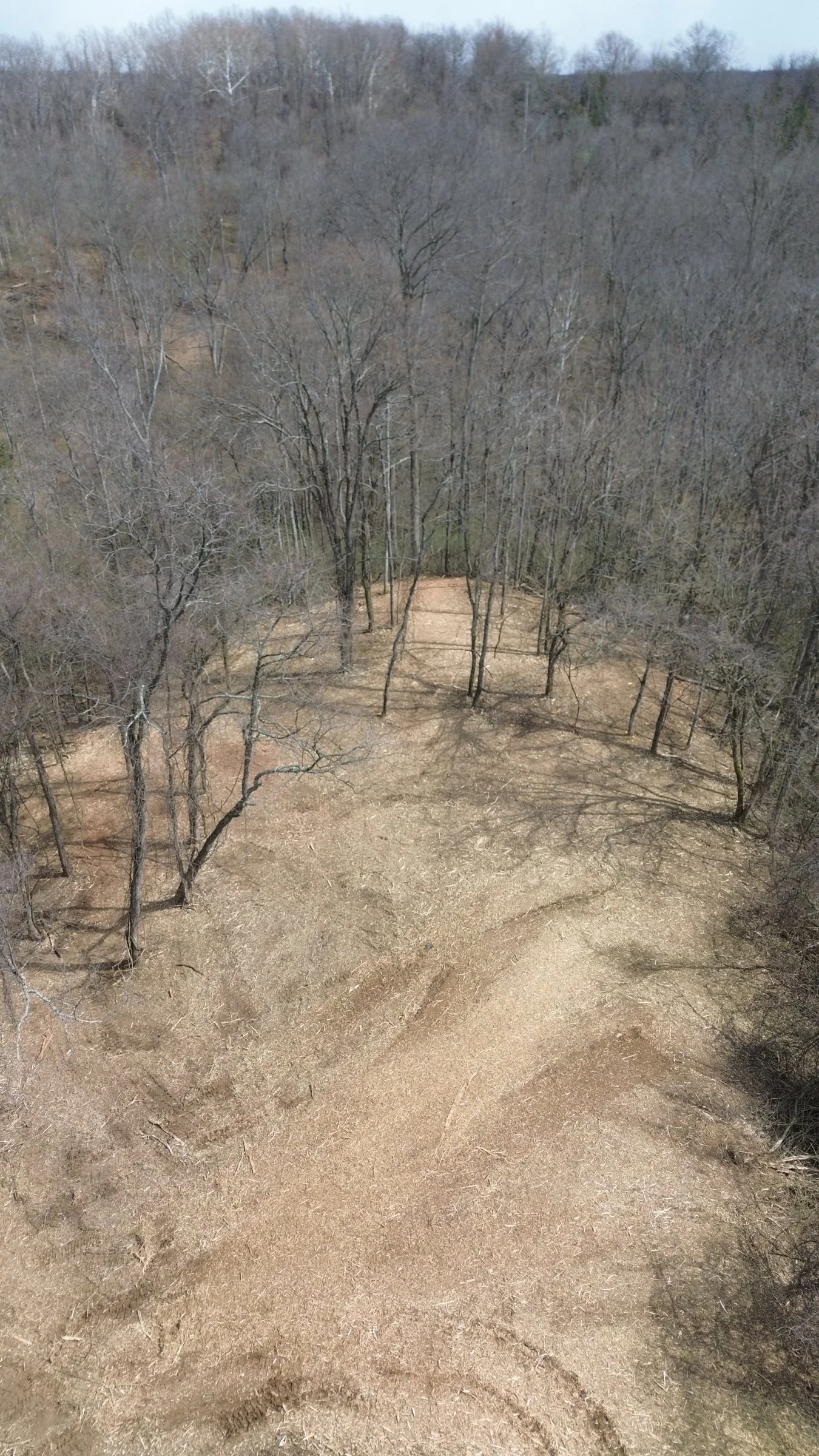
This is where forestry mulching beats a dozer for trail work. A mulcher grinds the brush, saplings and honeysuckle in place and leaves the mature trees alone. You can bend the trail around a big oak instead of pushing it over. There are no burn piles, no brush to haul off, and the ground stays mostly undisturbed.
4. What the trail looks like after
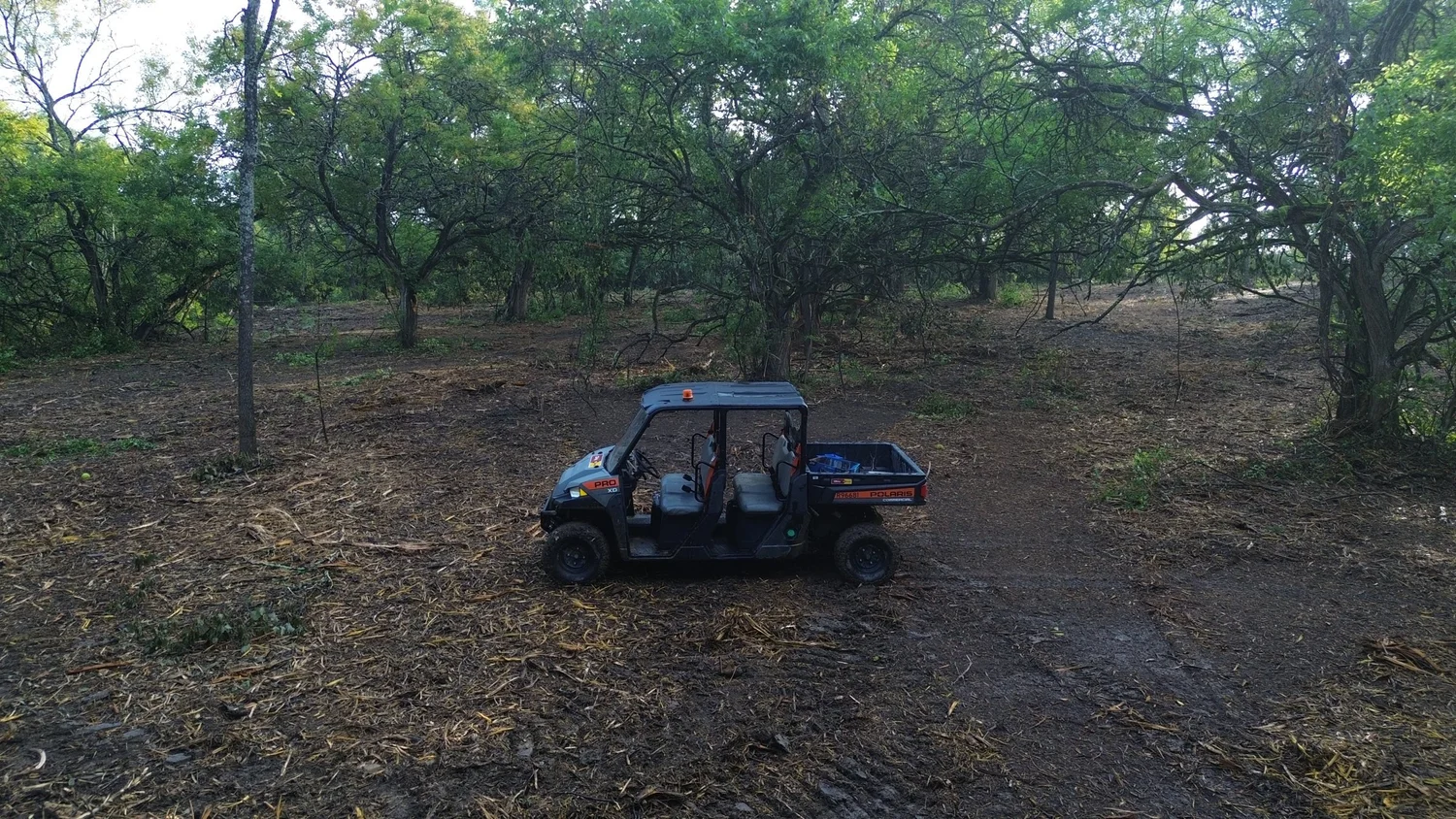
A freshly mulched trail has a layer of wood chips on the ground. It's soft to walk on, it holds the soil in place and it breaks down over time. Stumps are ground down low. For trails that will get heavy traffic or need to be driven in wet weather, some owners add gravel in the worst spots later.
5. Keep it open
Trails grow back from the edges, especially where there's honeysuckle nearby. A recut every season or two keeps them open. We use our Ventrac for that. It's quick on trails and handles the hills.
Want a trail cut?
We cut walking trails, ATV and dirt bike trails, hunting access and drill-rig access paths for geotech crews. See our trail cutting and access paths page, or call us and we'll come walk the route with you.
Common questions
How wide should an ATV trail be?
Wide enough for the machine plus some room on each side, with enough overhead clearance to ride through. We size every trail to what's going to use it, from walking paths up to truck access.
Will cutting a trail hurt my trees?
Not if it's done right. Forestry mulching takes the brush and saplings and leaves the mature trees. We route the trail around the trees worth keeping.
Do you haul away the brush?
No. The mulcher grinds it in place into a layer of wood chips. That layer protects the soil and breaks down over time. No burn piles, no hauling.
How do I keep a trail from growing back in?
Plan on a recut every season or two, especially near honeysuckle. We do trail recuts with our Ventrac.
Get a free quote
Bulk Co is a forestry mulching and land clearing contractor based in Harrison, Ohio, serving properties within 50 miles of Greater Cincinnati. Tell us what you've got and we'll come walk it.